
2026-09-07 · Tom Reeves
How To Spot Creosote After A Blue Norther Hits Richardson
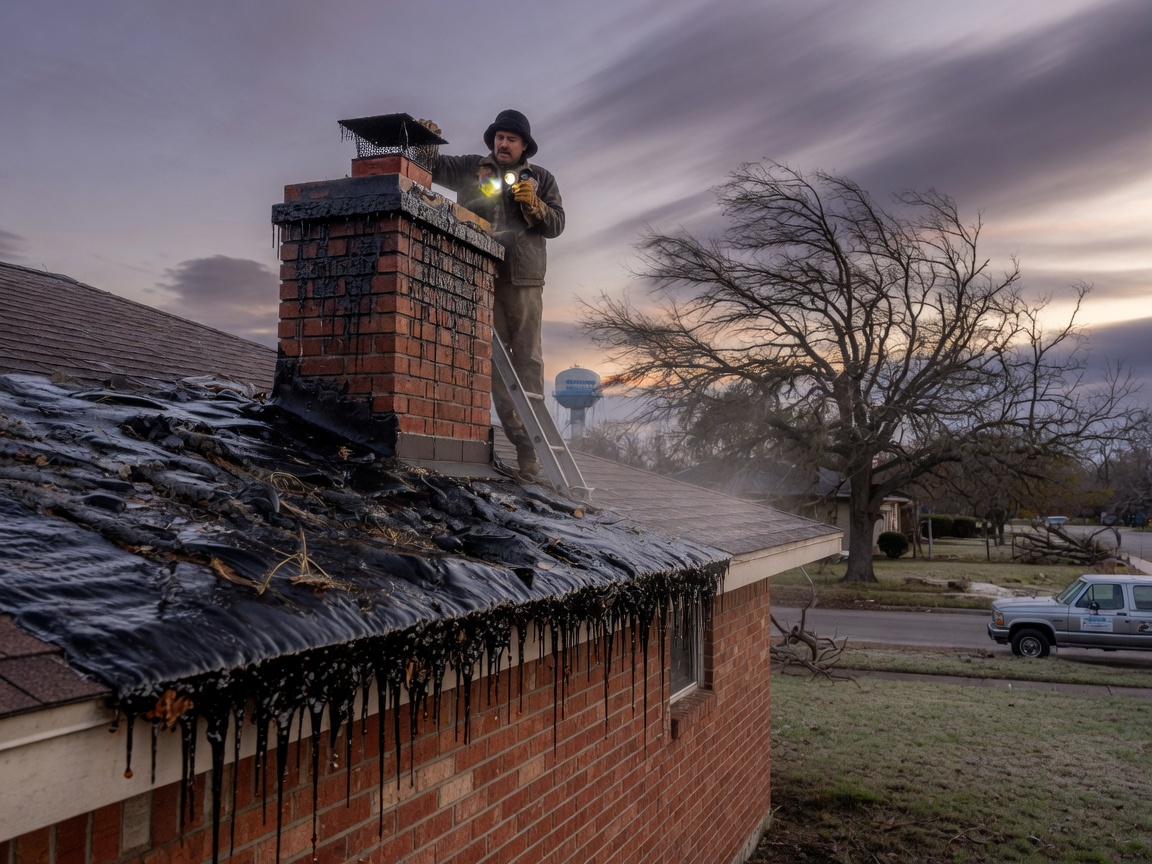
A Blue Norther drops temperatures 20–30 degrees in hours across Richardson, forcing wood fires to burn cooler and produce more creosote that settles as shiny black or brown layers inside the flue. Homeowners in neighborhoods like Canyon Creek and near Central Expressway see this pattern most often because older brick chimneys with 8-inch flues trap the residue faster when wind gusts exceed 30 mph and pull heat up unevenly.
How Blue Northers Change Combustion in Richardson Homes
Richardson sits in Dallas County where many 1970s–1990s homes use masonry chimneys venting fireplaces sized for cedar or mesquite logs. When a Blue Norther arrives, the sudden cold creates a stronger negative pressure that pulls smoke faster yet leaves unburned particles clinging to cooler flue walls. Wind-driven rain can also dampen the crown, slowing drying and allowing creosote to stay moist and sticky for days afterward. These conditions differ from steady winter fronts because the rapid swing keeps the flue temperature below 250°F longer, the range where third-stage creosote forms hardest deposits.
Visual Signs of Creosote After the Front Passes
Open the damper and shine a bright flashlight upward from the firebox. Fresh creosote appears as a glossy black coating 1/8-inch thick or more along the north-facing side of the flue where wind cools the brick fastest. Flaky, tar-like sheets that rub off on a gloved finger indicate second-stage buildup common after one or two cold snaps. Hard, crusty ridges near the smoke shelf signal advanced third-stage creosote that requires professional removal rather than a simple brush. Check the cleanout door at the base for fine black powder mixed with water stains left by post-storm condensation.
Safe Steps to Inspect Without Risk
Wait 48 hours after the front clears so any residual moisture evaporates. Wear a dust mask and headlamp, then remove the damper handle if present to gain a clearer view. Run your finger along the interior brick at eye level inside the firebox; any residue thicker than a credit card means the flue needs attention before the next cold spell. Avoid climbing onto the roof during high winds that often follow Blue Northers in the Richardson area. Note any white efflorescence on exterior brick, which shows moisture has carried creosote acids through the mortar joints.
When Local Conditions Require a Sweep
Richardson homes near the Cottonwood Creek corridor experience extra draft issues because the slight valley funnels northerly winds directly into chimneys. If you see creosote covering more than 1/4 of the flue circumference or smell a sharp chemical odor when the fireplace is cold, schedule service rather than attempt DIY cleaning. Chimney inspection near me reveals hidden cracks that Blue Norther temperature swings can widen. Pairing the check with chimney cleaning removes the layer before it reaches the 1/4-inch thickness that raises fire risk. Homeowners in adjacent Plano often combine both services after the first hard freeze.
Continuing Care Through Winter
Burn only seasoned hardwood and keep fires small during the first 24 hours after a Blue Norther so the flue warms gradually. Clear leaves and debris from the rain cap before the next front arrives, since blocked caps increase smoke velocity and creosote adhesion. Review the related guide on Why Cedar And Mesquite Logs Increase Chimney Cleaning Needs In Dallas for fuel-specific tips that apply directly to Richardson fireplaces. If animal activity appears after storms, cross-reference What Richardson Homeowners Should Know About Chimney Animal Blockages before the next temperature drop.